Read the neighborhood
Begin with the pattern. Finish with the site.
Historic Kenwood is best read as a sequence of narrow planting decisions. Broad crowns may shade one block while driveways, alleys, service lines and construction interrupt the next. Separate places that can support a long-lived canopy tree from smaller spaces where a restrained native form is the more durable choice.
Where can young and mid-sized trees establish now so today’s mature canopy is not followed by a long shade gap?
Canopy signals
What to notice on the walk.
Age-class mix
Look beyond the largest trees and record whether young and mid-sized crowns can carry shade forward.
Alley pressure
Treat rear access, waste collection, service drops and turning space as part of the planting envelope.
Connected soil
A lawn opening may still be divided by paving, foundations or compacted vehicle routes.
Tree shortlist
Candidates to investigate—not a shopping list.
Confirm the exact site, mature dimensions, Pinellas County distribution, current rules and nursery form before selecting a tree.
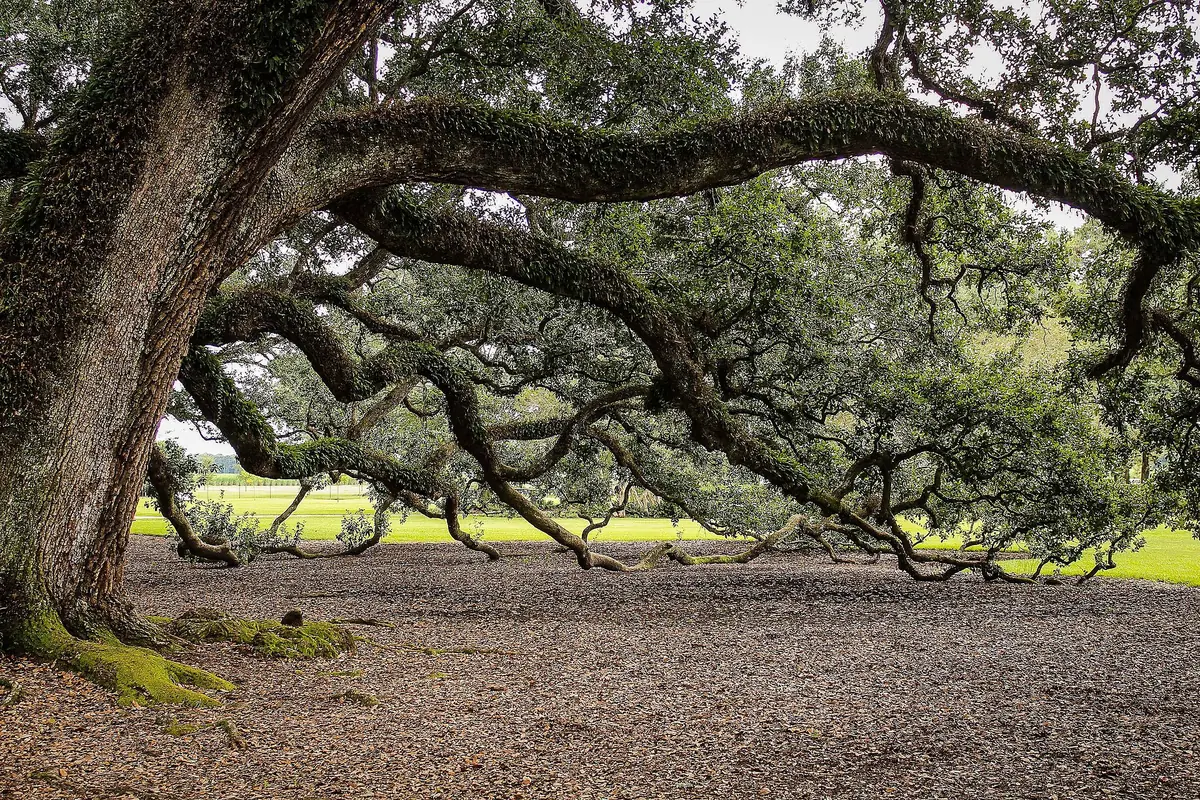
Quercus virginiana
Southern live oak
Major shade where broad crown and rooting space are genuinely available.
Watch: Do not treat a narrow verge or tight foundation setback as future room.
Ilex vomitoria
Yaupon holly
A smaller native tree or large shrub for constrained sites and layered habitat.
Watch: Confirm mature size, form and fruiting preference.
Ulmus alata
Winged elm
A deciduous native candidate for medium-scale canopy and seasonal light.
Watch: Verify local suitability, nursery structure, soil volume and clearance.
Beyond the tree
Build the plant community in layers.
Canopy edge
Beautyberry / coontie
Preserve walks, windows and safe street visibility at mature size.
Sunny opening
Muhly grass / blanketflower
Match drainage and irrigation to the exact site.
Low ground layer
Frogfruit / sunshine mimosa
Keep a deliberate edge beside paving and access routes.
A 20-minute canopy walk
Take the field note outside.
- 01Begin beneath an old crown
Estimate crown spread, unpaved soil and distance to the next young tree.
- 02Follow an alley edge
Map service lines, access clearances, heat and compaction.
- 03Finish at a recent planting
Check root flare, mulch, watering access and mature fit.
Keep reading
Guides for the yard behind the neighborhood pattern.
Use these practical field guides to translate the observations from your walk into a site-specific shortlist and planting plan.
Live Oak, Gumbo Limbo or Southern Magnolia for a Florida Yard?
A side-by-side way to compare three distinctive trees by mature space, exposure, roots and regional fit.
Open field guideFlorida Native Trees for Small Yards and Utility Lines
How to work backward from mature size, clearance and root space before choosing a nursery tree.
Open field guideA Seasonal Tree Calendar for West-Central Florida Yards
What to observe, plan and maintain through the dry season, rainy season and storm season.
Open field guideSources and map references
- City of St. Petersburg GIS - Neighborhood Associations
- City of St. Petersburg - 2022 Tree Canopy Analysis
- Florida Native Plant Society - Native plant finder
- UF/IFAS - Urban tree site evaluation and species selection
This page describes a field-observation framework. It is not a parcel-level inventory, landscape plan or substitute for current municipal guidance.